

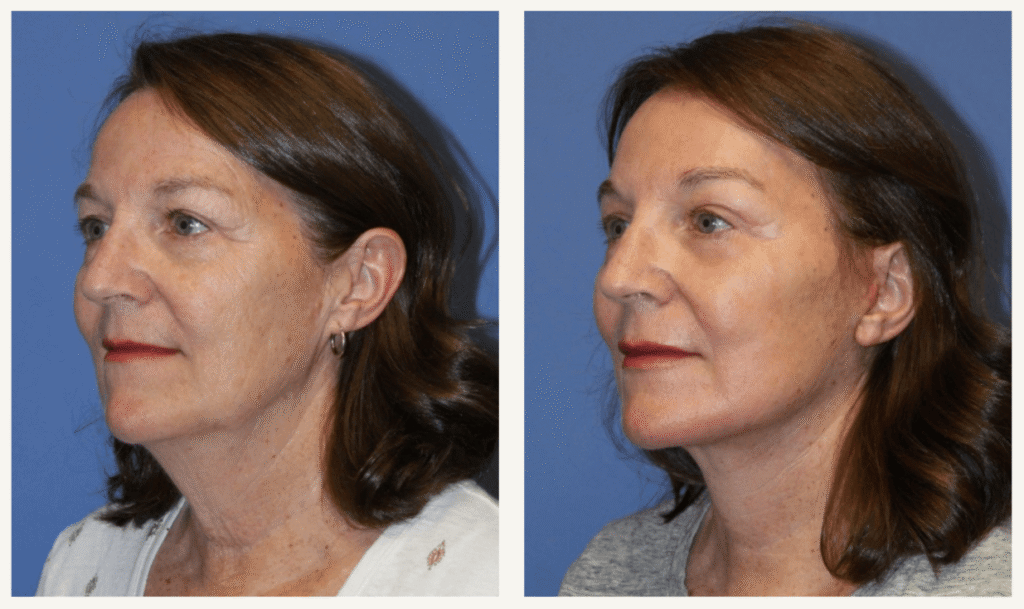
Patients who research facelift options quickly discover that not all procedures are built the same — and that results vary far more than most practices openly discuss. Some patients look refreshed and natural a decade after surgery. Others find their results fading within a few years, or worse, looking pulled and unnatural from the start. The difference between those two outcomes is rarely luck. It comes down to six specific factors that shape whether a facelift holds up over time.
If you’re at the point of asking What is a facelift and whether it’s the right move for you, this is the information that should come before you schedule anything.
1. The Surgical Technique Used
The technique a surgeon chooses has more influence on longevity than almost any other variable. Skin-only facelifts — procedures that reposition only the outermost layer — have a shorter lifespan because skin has little structural integrity on its own. It stretches. It shifts. It loses the battle against gravity again within a few years.
The deep plane facelift addresses the SMAS layer — the structural, muscular, and fascial system beneath the skin — along with the deeper fat compartments that contribute to facial aging. By repositioning tissue at a deeper anatomical level, the results sit on a more stable foundation. The skin is repositioned with minimal tension because the underlying structure is doing the work.
This technique requires significantly more surgical knowledge and time than surface-level approaches. Surgeons who perform it at high volume develop a precision that directly translates to how natural and long-lasting the results appear.
2. Your Surgeon’s Training and Case Volume
Facelift surgery is not uniformly taught across all training programs. Some surgeons complete residency with limited exposure to deep-plane techniques. Others pursue fellowship training in facial plastic and reconstructive surgery specifically — spending an additional year focused exclusively on facial anatomy, facial aging, and the procedures used to address it.
That training gap shows up in outcomes. A surgeon who has performed hundreds of cases in a specific technique has seen the full range of anatomical variations, the common points of complication, and the subtle intraoperative decisions that shift a result from good to exceptional. That case-specific experience cannot be shortcut.
The American Board of Facial Plastic and Reconstructive Surgery requires candidates to document their case experience and pass both written and oral examinations before certification — a process that sets a meaningful bar for demonstrated competency in facial procedures. When selecting a surgeon, verify their board certification directly, and ask specifically about their volume in the procedure you’re considering.
3. Patient Selection and Honest Candidacy Assessment
Not every patient asking about a facelift is the right candidate for one — and not every surgeon will tell you that. Practices that prioritize volume over outcomes tend to offer surgery to patients who might be better served by a different procedure, a less invasive option, or simply more time before surgery is appropriate.
The right facial surgery practice will conduct a thorough pre-operative assessment and give you an honest read on your candidacy. That includes evaluating your skin quality, bone structure, fat distribution, degree of facial laxity, and overall health. Patients who are good candidates for a particular procedure at a particular stage of facial aging tend to get better, longer-lasting results than those who had surgery earlier or later than was anatomically appropriate.
If a surgeon is willing to tell you that you’re not a good candidate yet, or that a different approach would serve you better — take that as a strong sign of clinical integrity.
4. Your Commitment to Post-Operative Care
A surgeon’s work ends when the procedure does. What happens in the weeks and months following surgery has a direct bearing on how results settle and how long they last. Patients who follow post-operative instructions closely, protect their skin from UV exposure, avoid smoking, and maintain a stable weight tend to see their results hold up significantly longer than those who don’t.
Research from the National Institutes of Health confirms that smoking is one of the most significant risk factors for poor wound healing and compromised outcomes following facial surgical procedures — and that patients who quit smoking well in advance of surgery and remain smoke-free during recovery show measurably better results.
Sun protection is equally relevant. UV exposure accelerates the skin laxity and volume loss that facelifts address. Patients who treat sun protection as a long-term commitment are, in effect, extending the lifespan of their surgical results.
5. Your Approach to Ongoing Facial Maintenance
A facelift addresses the structural changes that have already occurred. It does not stop the aging process from going forward. Patients who pair their surgical results with appropriate non-surgical maintenance — skin care, sun protection, periodic injectables where indicated — preserve their outcomes far longer than those who treat surgery as a one-and-done answer.
This doesn’t mean an aggressive or expensive maintenance routine. It means treating your face with the same level of care after surgery that you brought to the decision to have surgery in the first place. The patients who get the most from their results are the ones who stay engaged with their care over time.
A good practice will give you a realistic picture of what post-surgical maintenance looks like for your specific situation — not a one-size-fits-all answer, and not a hard sell on additional treatments.
6. The Practice You Choose to Work With
Every factor on this list is shaped by the practice you select. The technique used, the honesty of the candidacy assessment, the quality of post-operative instructions, the availability of follow-up care — all of it flows from the people you trust with your face.
Patients who have asked how long do facelifts last and received a straight answer — rather than vague reassurances — are more likely to have found a practice that operates with integrity across all of its clinical decisions. The longevity of facelift results is not a fixed number. It ranges from a few years to well over a decade, depending on the factors above, and a qualified surgeon will walk you through what’s realistic for your anatomy and goals without overselling the outcome.
The transformative power of a well-executed facelift is real. Patients describe it as one of the most meaningful decisions they’ve made — not because it changed who they are, but because it brought their appearance in line with how they actually feel. That outcome is worth it when it’s approached the right way, with the right surgeon, at the right practice.
What to Look for Before You Commit
Before scheduling a consultation, take time to research your surgeon’s credentials, training background, and case volume specific to facelift procedures. Read reviews with attention to how patients describe the communication throughout the process — before, during, and after surgery. Look at before-and-after photos critically: are the results natural? Do they look like the same person, refreshed, or do they look altered?
Ask during your consultation how the surgeon approaches the structural layers of the face, what technique they recommend for your anatomy and why, and what realistic longevity you should expect from your results. The answers will tell you a great deal about whether the practice prioritizes your outcome or their schedule.
Patients searching for a facial plastic surgeon in Utah who performs high-volume, fellowship-trained facelift procedures in a practice built around transparent, patient-first communication have a clear place to begin their research.
Why Patients Choose Bitner Facial Plastic Surgery
The six factors that determine facelift longevity all point toward the same conclusion: the practice you choose is the variable with the most influence over your outcome. At Bitner Facial Plastic Surgery, patients work with a fellowship-trained, board-certified facial plastic surgeon whose practice is focused exclusively on the face. From the first consultation through the final follow-up, the team at Bitner Facial Plastic Surgery provides honest candidacy assessments, thorough pre-operative education, and surgical care that prioritizes lasting, natural results.
If you’re ready to move from questions to real answers, Bitner Facial Plastic Surgery is ready to have that conversation with you.
Take the Next Step Today
Reaching out is simple. Contact Bitner Facial Plastic Surgery through any of the following:
Call (801) 525-8727 to speak with a team member and schedule your consultation at a time that works for you.
Chat with us online for quick answers to your initial questions — no commitment required.
Fill out the contact form on the website to request an appointment at your convenience.
Your results start with the right surgeon. Start that conversation today.