

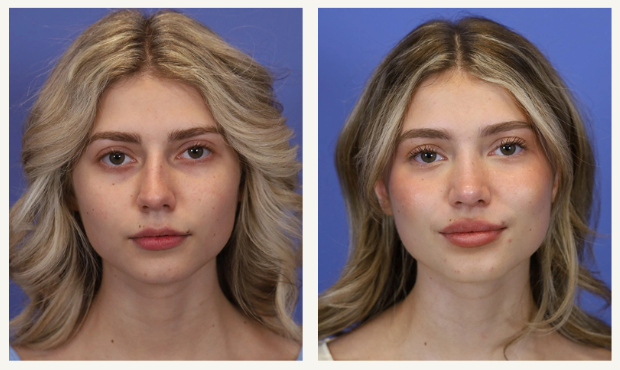
Rhinoplasty is one of the most requested facial procedures in the country — and one of the most personal. The nose sits at the center of the face, influencing how every surrounding feature reads. For patients who have spent years feeling self-conscious about the shape, size, or function of their nose, the decision to pursue surgery carries real weight. So does the decision about who performs it.
Patients researching a nose job Utah have no shortage of providers to evaluate. What they often lack is a clear framework for understanding the safety considerations, the realistic risk profile of the procedure, and what a genuinely thorough consultation should look like. This guide covers all three — and explains why those factors point consistently toward one standard of care.
Why Rhinoplasty Safety Starts With Surgeon Selection
The safety profile of rhinoplasty is directly tied to the training and experience of the surgeon performing it. Rhinoplasty is consistently ranked among the most technically demanding procedures in facial plastic surgery. The nasal framework — a complex arrangement of bone, cartilage, and soft tissue — requires a surgeon who understands not just how to reshape it, but how changes in one area affect the appearance and function of adjacent structures.
Surgeons who have completed fellowship training in facial plastic and reconstructive surgery have spent years developing that depth of anatomical knowledge. They have operated on the nose at high volume, seen the full range of anatomical variation, and built the intraoperative judgment that translates to safer procedures and more predictable results.
The distinction matters most at the margins — in the decisions made mid-surgery when anatomy doesn’t present exactly as planned, or when a judgment call is required that no pre-operative imaging could fully anticipate. Those moments separate surgeons with deep facial training from those with more generalized backgrounds.
Understanding the Real Risk Profile of Rhinoplasty
Every surgical procedure carries risk, and rhinoplasty is no exception. Patients who go into surgery with a clear picture of those risks — and who have had an honest conversation with their surgeon about them — are better positioned to make informed decisions and to recognize what is and isn’t normal during recovery.
The risks associated with rhinoplasty include bleeding, infection, adverse reaction to anesthesia, prolonged swelling, asymmetry, changes in skin sensation, and the possibility of unsatisfactory cosmetic results. Revision surgery is more common in rhinoplasty than in most other facial procedures — a fact that underscores how much surgical precision and pre-operative planning matter in the first procedure.
The American Society of Plastic Surgeons notes that choosing a board-certified surgeon with specific training and volume in the requested procedure is one of the strongest available risk-reduction factors for patients considering cosmetic facial surgery. That is not a marketing claim — it is a clinical reality reflected in complication rates and revision statistics across the field.
Patients who ask their surgeon about their specific complication history and how they manage the most common adverse outcomes are doing exactly what informed surgical patients should do. A qualified surgeon will answer those questions directly.
What a Utah Nose Job Consultation Should Actually Cover
Many patients are surprised by how much ground a thorough rhinoplasty consultation covers. A consultation is not a formality or a sales appointment — it is a clinical evaluation that should give both the patient and the surgeon a clear picture of what the procedure would involve, what outcomes are achievable, and whether surgery is the right path.
A thorough consultation for a Utah nose job should include a detailed evaluation of nasal anatomy: the skin thickness, the bony framework, the cartilaginous structure, the tip definition, and the overall relationship between the nose and the surrounding facial features. The surgeon should assess both cosmetic and functional concerns — including breathing difficulties, septal deviation, or other structural issues that affect daily quality of life.
The National Institute on Deafness and Other Communication Disorders identifies nasal obstruction as a condition affecting a significant portion of the adult population, with structural surgical correction among the most effective long-term treatments for anatomically rooted cases. Patients who carry both cosmetic and functional concerns into their consultation may find that a single procedure can address both — a meaningful consideration for surgical planning and, in some cases, insurance coverage.
The consultation should also cover the surgical approach being recommended, the realistic timeline for seeing final results, what recovery will involve at each stage, and what the procedure cannot accomplish for your specific anatomy. That last point is one of the clearest signals of a surgeon operating with integrity.
Setting Realistic Expectations Before Any Commitment
Patients who carry realistic expectations into rhinoplasty are significantly more satisfied with their outcomes than those who arrive with an idealized picture of what surgery can deliver. A nose that looks natural, proportionate, and consistent with the patient’s overall facial anatomy is the goal — not a nose that matches a photo from a celebrity’s Instagram or a composite generated by an app.
Realistic expectations are not a limitation on what surgery can accomplish. They are the foundation of a result the patient will be genuinely happy with. A surgeon who takes time during the consultation to walk through what is anatomically achievable for your specific face — and who is willing to push back on goals that would produce an unnatural result — is a surgeon who prioritizes your long-term satisfaction over a quick surgical booking.
Imaging tools can help in this conversation. Many practices use digital imaging to give patients a visual approximation of possible outcomes. Those images are a communication tool, not a guarantee — but they help align the surgeon and patient around a shared aesthetic goal before a single incision is made.
How Much Is a Nose Job in Utah — and What Drives the Price
Patients frequently ask how much is a nose job in Utah before they’ve had a consultation, and the answer is always the same: it depends on what your case actually involves. Pricing for rhinoplasty reflects the surgeon fee, facility fee, anesthesia, and the scope and complexity of the procedure itself.
Surgeon fees for rhinoplasty vary based on training, board certification, and case volume in this specific procedure. Practices with fellowship-trained facial plastic surgeons who perform rhinoplasty at high volume charge fees that reflect the depth of their expertise. Practices that offer significantly below-market pricing are typically making tradeoffs that show up in outcomes.
The cost of revision rhinoplasty — when a first procedure requires correction — almost always exceeds what a patient saved by choosing a less-qualified surgeon initially. Revision surgery is technically more demanding than primary surgery, carries higher risks, produces less predictable results, and requires the same facility and anesthesia costs as the original procedure. Getting the first surgery right is the most cost-effective path available.
Any practice worth working with will provide a detailed, itemized quote after a thorough in-person evaluation — not a number quoted over the phone before anyone has assessed your anatomy.
Global Standards in Facial Surgery and What They Mean for Utah Patients
Rhinoplasty is performed worldwide, and the global standards set by leading facial plastic surgery organizations reflect decades of accumulated evidence about what training, technique, and patient care look like at the highest level. The American Board of Facial Plastic and Reconstructive Surgery and the American Academy of Facial Plastic and Reconstructive Surgery both set rigorous benchmarks for certification, continuing education, and ethical practice.
Practices that operate according to global standards in facial surgery — accredited facilities, board-certified surgeons, documented case volume, transparent patient communication — give patients the strongest available assurance that their care meets a consistently high bar. Those standards are not automatic. They require deliberate, ongoing commitment from the people running the practice.
When evaluating any provider, ask directly how the practice measures up against those standards. A qualified practice will not hesitate to answer.
Facial Rejuvenation Goals and the Rhinoplasty Decision
For some patients, rhinoplasty is part of a broader set of facial rejuvenation goals. A nose that once felt proportionate may read differently as the face ages — as volume shifts, skin changes, and other features evolve. Some patients pursuing rhinoplasty are also considering complementary procedures: a chin augmentation for better facial balance, eyelid surgery, or skin resurfacing.
A qualified facial plastic surgeon will evaluate those goals in the context of your full facial anatomy and give you an honest assessment of what combination approach — if any — would meaningfully serve your results. The recommendation should be driven by clinical reasoning, not by an interest in scheduling additional procedures.
Finding the Best Nose Job Surgeon in Utah
Patients researching the best nose job surgeon in Utah should evaluate surgeons on the same criteria that predict good outcomes across all facial procedures: fellowship training in facial plastic and reconstructive surgery, board certification through a recognized specialty board, case volume specific to rhinoplasty, and a consultation process that prioritizes honest, anatomy-specific communication over reassurances.
Read reviews with attention to how patients describe the full experience — not just the final result. Look at before-and-after photos critically: do the results look like the same person, refreshed and refined? Do they reflect a range of patient types, not just the most photogenic outcomes? Ask during your consultation whether the surgeon performing your procedure is the same one conducting your evaluation.
Why Patients Choose Bitner Facial Plastic Surgery
Every factor that shapes rhinoplasty safety, outcomes, and patient satisfaction converges at the same point: the practice you choose. Bitner Facial Plastic Surgery is built on fellowship-trained, board-certified facial plastic surgery care focused exclusively on the face — with a consultation standard that gives every patient honest, anatomy-specific information and a clear picture of what their procedure would realistically involve.
Patients across Utah who have researched their options carefully and asked the right questions have consistently found the level of care, communication, and surgical quality they were looking for at Bitner Facial Plastic Surgery. The team is ready to give you the same honest conversation.
Take the Next Step Today
Getting clear answers about your options is simple. Reach out to Bitner Facial Plastic Surgery through any of the following:
Call (801) 525-8727 directly to speak with a team member and schedule your consultation at a time that works for you.
Fill out the contact form on the website to request an appointment at your convenience.
Your results start with the right surgeon. Start that conversation today.