

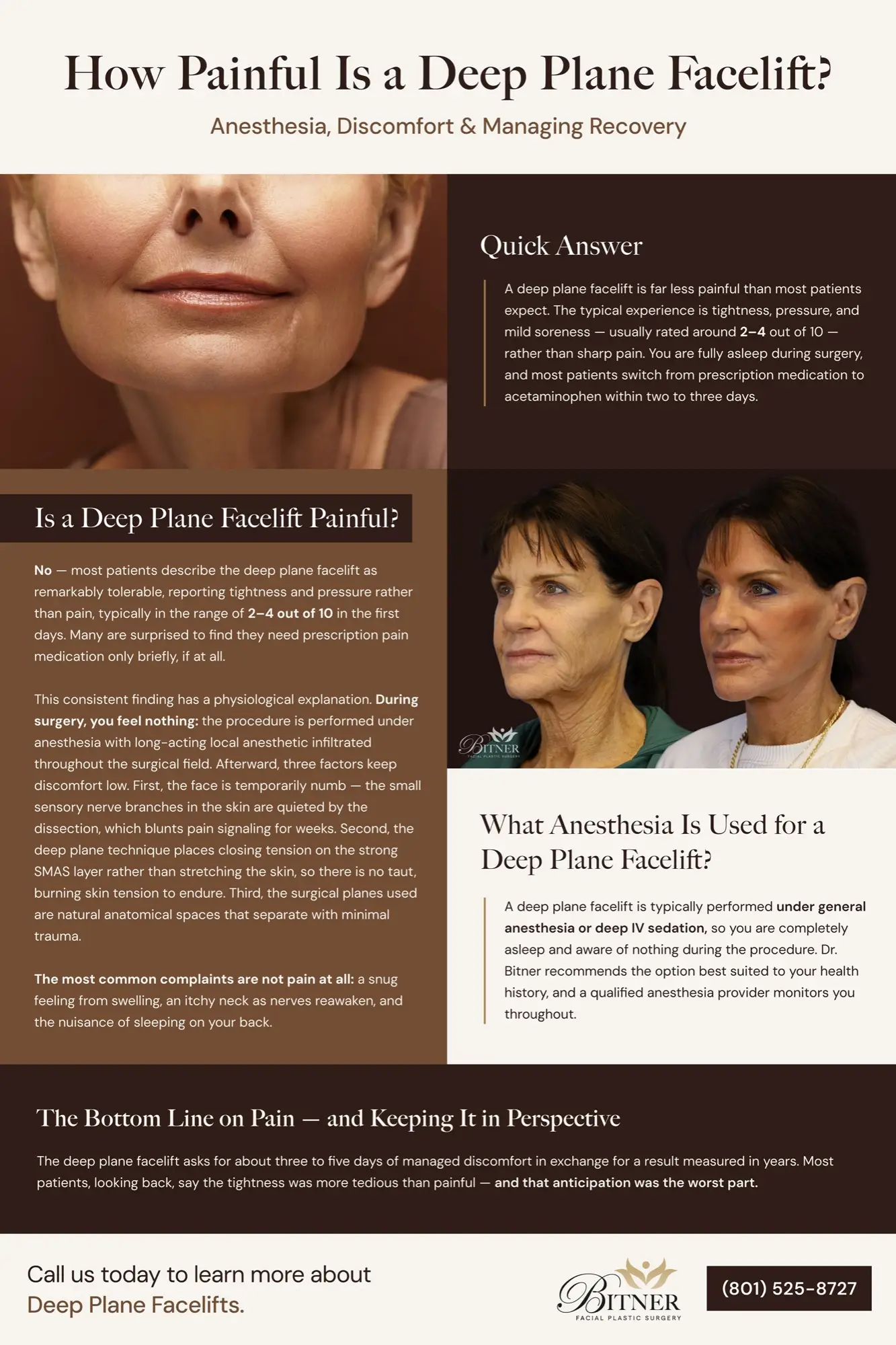
A deep plane facelift is far less painful than most patients expect. The typical experience is tightness, pressure, and mild soreness — usually rated around 2–4 out of 10 — rather than sharp pain. You are fully asleep during surgery, and most patients switch from prescription medication to acetaminophen within two to three days.
Medically reviewed by John Bitner, MD — Double Board-Certified Facial Plastic and Reconstructive Surgeon. Last updated: July 30, 2026.
Fear of pain keeps more people from scheduling a facelift consultation than any other single concern — and it is the concern least supported by what patients actually report. The deep plane facelift sounds like it should hurt more than a standard lift; it works on deeper structures, after all. In practice, the opposite tends to be true, for reasons rooted in how the technique handles tissue and how the face’s sensory nerves respond to surgery. This post covers all three parts of the question: what you feel during surgery (nothing), what the first two weeks are like, and how discomfort is managed. For the full healing calendar beyond comfort, see our week-by-week companion guide, the deep plane facelift recovery timeline.
Is a Deep Plane Facelift Painful?
No — most patients describe the deep plane facelift as remarkably tolerable, reporting tightness and pressure rather than pain, typically in the range of 2–4 out of 10 in the first days. Many are surprised to find they need prescription pain medication only briefly, if at all.
This consistent finding has a physiological explanation. During surgery, you feel nothing: the procedure is performed under anesthesia with long-acting local anesthetic infiltrated throughout the surgical field. Afterward, three factors keep discomfort low. First, the face is temporarily numb — the small sensory nerve branches in the skin are quieted by the dissection, which blunts pain signaling for weeks. Second, the deep plane technique places closing tension on the strong SMAS layer rather than stretching the skin, so there is no taut, burning skin tension to endure. Third, the surgical planes used are natural anatomical spaces that separate with minimal trauma. The most common complaints are not pain at all: a snug feeling from swelling, an itchy neck as nerves reawaken, and the nuisance of sleeping on your back.
What Anesthesia Is Used for a Deep Plane Facelift?
A deep plane facelift is typically performed under general anesthesia or deep IV sedation, so you are completely asleep and aware of nothing during the procedure. Dr. Bitner recommends the option best suited to your health history, and a qualified anesthesia provider monitors you throughout.
Whichever route is chosen, the surgical field is also infiltrated with long-acting local anesthetic. This does double duty: it minimizes bleeding during surgery, and it means you wake up with the face already numbed — most patients’ first hours after surgery are more groggy than sore. Before surgery, you will review your full medication list, since blood thinners, certain supplements (fish oil, vitamin E, ginkgo), and NSAIDs are paused on a set schedule to reduce bruising. Anesthesia questions deserve real answers, not reassurance — bring every concern to your consultation, including past experiences with nausea or grogginess, so the plan can be adjusted in advance.
Discomfort Timeline: Days 1–14
Discomfort after a deep plane facelift peaks in the first 48–72 hours and declines quickly from there. Here is the day-by-day arc most patients experience.
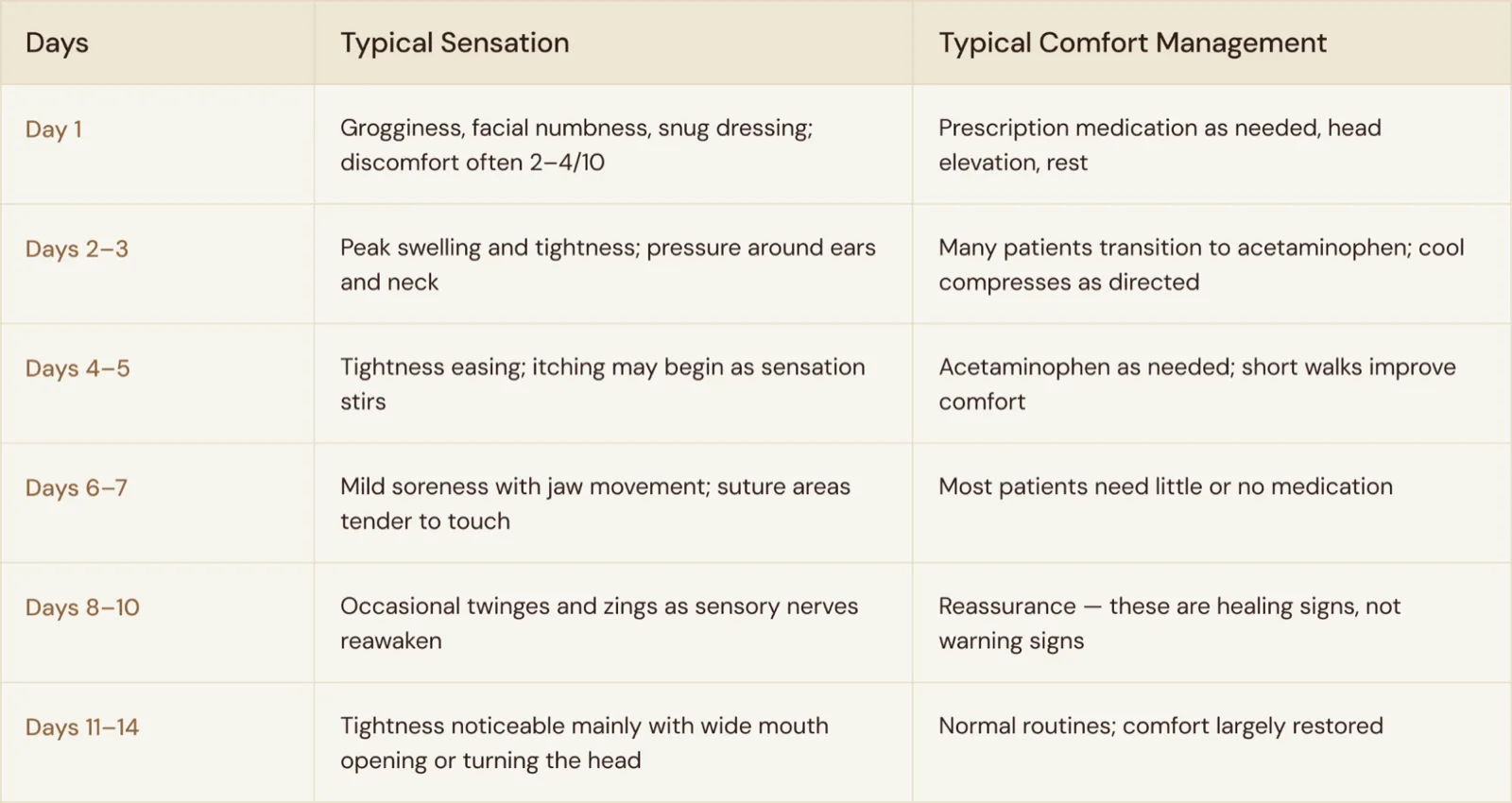
Two sensations in this window deserve special mention because they worry patients unnecessarily. Numbness across the cheeks and around the ears is expected and protective — it is why the first week is so comfortable — and resolves gradually over weeks to months. And the brief electric “zings” that appear in week two are the sensory nerves switching back on: a milestone, not a setback.
How Discomfort Is Managed — Before You Ever Feel It
Comfort after a deep plane facelift is planned, not improvised. You go home with a written medication schedule, and the plan anticipates discomfort rather than chasing it.
The core elements of that plan:
- A short course of prescription pain medication for the first days, which many patients use only at night or not at all
- Scheduled acetaminophen as the workhorse once the initial 48–72 hours pass
- Head elevation at 30–45 degrees around the clock for the first two weeks — the single most effective non-drug comfort measure, because it directly reduces the swelling that causes tightness
- Cool compresses used exactly as directed
- Gentle walking from day one, which eases stiffness and supports circulation
- Avoiding NSAIDs such as ibuprofen until cleared, since they increase bruising risk early on
Patients consistently report that following the boring parts of this list — elevation, walking, hydration — matters more to their comfort than any pill.
It also helps to plan the first 48 hours socially, not just medically. Arrange for a responsible adult to stay with you the first night, prepare soft foods in advance, and set up a recovery spot with pillows arranged for back-sleeping at an incline. Patients who wake up on day one to a stocked kitchen and a quiet schedule consistently describe the early days as easier than they feared.
When Discomfort Is Not Normal: Signs to Call the Office
Expected discomfort is symmetric, steady, and improving; pain that is sudden, one-sided, or escalating is a signal to call the office right away. Distinguishing the two is part of your discharge instructions, and it is simple.
Call promptly if you notice sudden swelling or tightness on one side of the face or neck, pain that sharply worsens rather than eases, or firm fullness under the skin — these can indicate a hematoma, a collection of blood that is very manageable when addressed early. Fever, spreading redness, or drainage from an incision also warrant a call. Dr. Bitner’s team reviews all of this before you go home, and patients reach a real person when they call with concerns. That accessibility is part of why patients often return for follow-up procedures or refer loved ones because of the trust they’ve built.
The Bottom Line on Pain — and Keeping It in Perspective
The deep plane facelift asks for about three to five days of managed discomfort in exchange for a result measured in years. Most patients, looking back, say the tightness was more tedious than painful — and that anticipation was the worst part.
If pain fear is the only thing standing between you and a consultation, bring that fear to the consultation itself. Walking through the anesthesia plan, the medication schedule, and the day-by-day arc with Dr. Bitner turns an abstract worry into a concrete, manageable plan. And when you are ready to see what the full recovery looks like beyond the first two weeks, the deep plane facelift recovery timeline picks up where this post leaves off.
Frequently Asked Questions
Is a deep plane facelift painful?
Most patients report that a deep plane facelift is far less painful than they expected. The typical sensation is tightness, pressure, and mild soreness rather than sharp pain, usually rated around 2–4 out of 10. Many patients transition from prescription medication to acetaminophen within two to three days.
How long does pain last after a deep plane facelift?
Meaningful discomfort after a deep plane facelift typically lasts three to five days. Tightness and pressure peak in the first 48–72 hours, ease significantly by the end of week one, and fade to occasional twinges by week two. A sensation of facial tightness can persist for several weeks as tissue settles.
Do you need general anesthesia for a deep plane facelift?
A deep plane facelift is typically performed under general anesthesia or deep IV sedation. Dr. Bitner recommends the safest option for your health history so you remain completely comfortable throughout the procedure. Either way, you sleep through surgery and wake with the face already numbed by long-acting local anesthetic.
Schedule a Consultation
Every patient’s comfort plan is built individually — anesthesia choice, medication schedule, and recovery support included. Dr. Bitner has devoted his practice exclusively to the face for more than 16 years, and he will answer every pain and anesthesia question before anything is scheduled. Call (801) 525-8727 to schedule a consultation today — the $250 consultation fee is applied to the cost of your procedure.
Dr. Bitner Facial Plastic Surgery, 425 S 100 W, Layton, UT 84041