

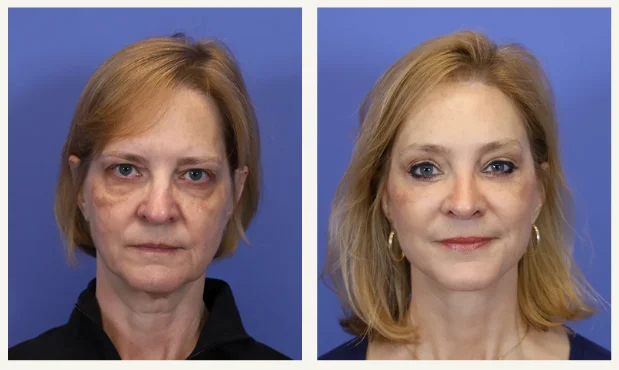
A consultation for eyelid surgery is not just a meet-and-greet. It is the most important appointment in your entire surgical process — the conversation that determines whether you and your surgeon are aligned on goals, whether you’re a strong candidate for the procedure, and whether the practice is one you can genuinely trust with your care.
Most patients arrive underprepared. They come with a vague sense of what bothers them about their eyes, a few photos saved on their phone, and a handful of questions they forgot to write down. They leave with less information than they needed and a follow-up call to ask everything they forgot.
Preparation changes that. Here is exactly how to walk into your blepharoplasty Utah consultation ready to make the most of every minute.
Know What You Want to Address Before You Walk In
The more clearly you can articulate your concerns, the more productive your consultation will be. Spend some time before your appointment identifying what specifically bothers you. Is it heaviness in the upper eyelids that makes you look tired or older than you feel? Is it puffiness or hollowing beneath the eyes? Is there a functional concern — a feeling that your upper field of vision is being affected by drooping skin?
Surgeons ask these questions at every consultation, but patients who have already thought through their answers give the surgeon better material to work with. A clear description of your concerns helps the surgeon evaluate whether those concerns are anatomically addressable, what procedure or combination of procedures would be most appropriate, and what realistic outcomes look like for your specific situation.
If you have photos that capture what bothers you — or photos of outcomes that align with what you’re hoping for — bring them. Visual references give the consultation a concrete starting point and help the surgeon understand your aesthetic priorities.
Research the Surgeon’s Credentials Before the Appointment
Your consultation preparation starts before you arrive at the office. One of the most productive things you can do in advance is verify your surgeon’s credentials independently — not through the practice’s own website, but through the certifying boards directly.
Board certification in facial plastic surgery signals that a surgeon has completed an accredited residency, pursued fellowship training focused on the face, and passed the examination process required by their certifying board. The distinction between a board-certified facial plastic surgeon and a surgeon with more general training matters in a procedure as anatomically precise as eyelid surgery. Knowing your surgeon’s specific certification before the consultation lets you ask more informed questions and evaluate their answers more critically.
The American Board of Medical Specialties maintains a public verification tool that allows patients to confirm a physician’s board certification status directly. Use it. A surgeon who is board-certified will have no hesitation pointing you there.
Prepare a Complete Medical History
Your surgeon needs a clear picture of your health history before making any surgical recommendations. Prepare a written summary that includes all current medications — prescription, over-the-counter, and supplements — any known allergies, previous surgeries and how your body responded, and any conditions that affect healing, bleeding, or anesthesia response.
Certain medications and supplements commonly taken by patients considering cosmetic procedures — including aspirin, ibuprofen, vitamin E, fish oil, and several herbal supplements — affect bleeding and healing. Your surgeon will need to know about them. Arriving with that information already organized saves time and signals that you’re taking the process seriously.
If you have a history of dry eye, thyroid conditions, or any prior eye surgery, make sure to mention those specifically. They are directly relevant to eyelid surgery candidacy and surgical planning.
Understand What the Consultation Should Cover
A thorough consultation for eyelid surgery covers specific ground. If yours doesn’t, that’s worth paying attention to.
Your surgeon should evaluate your eyelid anatomy in detail — assessing the degree of skin laxity, the position of the brow, the presence of ptosis, the condition of the lower eyelid skin and fat compartments, and the overall relationship between your eyelids and the surrounding facial structures. They should discuss whether you’re a candidate for upper surgery, lower surgery, or both, and whether any complementary procedures — a brow lift, for example — would meaningfully improve your results.
The consultation should also cover recovery in real, specific terms. The National Institutes of Health notes that patient satisfaction following facial cosmetic procedures is strongly correlated with the quality of pre-operative counseling and how clearly expectations are set before surgery. Practices that give patients a detailed, honest picture of what recovery involves — day by day, week by week — produce measurably better patient experiences than those who present recovery as a minor inconvenience.
If the consultation feels rushed, if your questions are receiving vague answers, or if the surgeon is not volunteering information about anatomy and candidacy without being prompted — those are signals worth weighing carefully.
Write Down Your Questions in Advance
Consultations move quickly. Patients who rely on remembering their questions in the moment frequently walk out having forgotten the most important ones. Write them down before you go, and bring the list with you.
A strong set of questions before surgery covers the following ground:
What specific technique do you recommend for my anatomy, and why? Are you the surgeon who will be performing the procedure, or will a resident or fellow be involved? What is your case volume specifically in eyelid surgery? What are the most common complications in this procedure and how do you manage them? What does my recovery timeline realistically look like? What are the limitations of what this procedure can accomplish for me?
That last question is one of the most revealing. A surgeon who gives you an honest, anatomy-specific answer — including what the procedure cannot fix — is operating with the kind of clinical integrity that tends to show up in outcomes. A surgeon who responds with reassurances and avoids the limitations conversation is giving you less than you need.
Pay Attention to How the Practice Communicates
The consultation is your opportunity to evaluate the practice, not just the surgeon. The staff you interact with before you reach the exam room, the clarity and completeness of the intake process, the way the office handles scheduling and pre-appointment communication — all of it reflects the standards the practice operates by.
Patients researching plastic surgery Utah options consistently report that the quality of communication throughout the process — from the first phone call to the final post-operative appointment — is one of the strongest predictors of overall satisfaction. Practices that communicate clearly before surgery tend to communicate clearly after it too. That matters enormously when questions arise during recovery.
Know What to Expect After the Consultation
A good consultation ends with clarity, not confusion. You should leave with a specific understanding of what procedure or procedures were recommended for your anatomy, why those recommendations were made, what the recovery will involve, what the total cost will be, and what the next steps are if you decide to move forward.
If you leave feeling uncertain about any of those things, call the practice and ask. A practice worth working with will welcome those follow-up questions without making you feel like an inconvenience.
The best facial plastic surgeon Utah patients return to and refer others to are the ones whose patients leave every appointment feeling more informed than when they arrived — not less.
Why Choosing the Right Practice Changes Everything
Preparation matters. The questions you ask, the records you bring, the research you do beforehand — all of it shapes how productive your consultation is and how clearly you can evaluate what you hear. A facial plastic surgeon Salt Lake City patients trust will meet that preparation with equally thorough, honest, anatomy-specific responses.
The standard to hold any practice to is straightforward: are you leaving with more clarity than you came with? Are your questions being answered specifically? Are the recommendations being driven by your anatomy and your goals, or by a template applied to every patient who walks in?
Those questions have clear answers at the right practice.
Why Patients Choose Bitner Facial Plastic Surgery
From the first phone call through the final follow-up appointment, patients at Bitner Facial Plastic Surgery receive the kind of thorough, honest, patient-first communication that a consultation should set the standard for. The practice is built around fellowship-trained, board-certified facial plastic surgery care focused exclusively on the face — with a consultation process that gives every patient real, anatomy-specific information and a clear picture of what their options actually look like.
If you’re ready to have that conversation, Bitner Facial Plastic Surgery is ready to meet you there.
Take the Next Step Today
Scheduling your consultation is straightforward. Reach out to Bitner Facial Plastic Surgery through any of the following:
Call (801) 525-8727 directly to speak with a team member and schedule your consultation at a time that works for you.
Fill out the contact form on the website to request an appointment at your convenience.
Your consultation is where every good outcome starts. Come prepared — and come ready to get real answers.